How does an organic biphase makeup remover work? Guide and practical tips

Why makeup removal is an essential step
Makeup goes beyond what's visible on the surface. Foundations, mascaras and eyeliners contain waxes, pigments and fatty compounds specifically designed to last all day. Without proper makeup removal, these residues accumulate over time and can clog pores, gradually affecting skin texture.
Daily makeup removal, performed each evening before applying skincare, is therefore the first step of an effective beauty routine. Without this step, serums and creams applied afterwards are poorly absorbed and therefore less effective. The choice of product matters as much as the consistency of the gesture: an unsuitable remover may require rubbing to achieve a clean result, unnecessarily stressing the delicate eye contour area.
What is a biphase makeup remover?
A biphase makeup remover is a formula made up of two distinct phases that coexist in the same bottle without mixing at rest. They are visible to the naked eye: the oil phase, being lighter, floats above the water phase. The bottle must be shaken before each use to combine them and activate their cleansing action.
The water phase
It consists of water, sometimes floral waters or hydrating actives such as vegetable glycerin. Its role is to dissolve the water-soluble components of makeup: water-based pigments, sweat residues and light impurities that accumulate throughout the day.
The oil phase
It is composed of plant-based oils or esters of natural origin. It targets the lipophilic components of makeup: waxes, oil-based pigments, long-wearing foundations and waterproof formulas. This is what allows a biphase remover to tackle the most resistant formulas without rubbing.
Why is a biphase makeup remover effective on waterproof makeup?
Waterproof products owe their staying power to fatty, hydrophobic compounds that repel water. A purely water-based formula, as found in some classic removers, cannot dissolve them effectively: water slides off these surfaces without dislodging them.
The biphase principle relies on chemistry: like dissolves like. The oil phase latches onto the lipophilic components of waterproof makeup and lifts them from the skin. The water phase then takes over to carry away the residues and complete the cleanse. Both phases work in a complementary way in a single step, something a classic emulsion cannot achieve with the same efficiency.
Which skin types can use a biphase makeup remover?
Biphase makeup removers are often associated with dry or sensitive skin, but their versatility goes much further. The choice of ingredients in the oil phase is key: depending on their nature, they can suit very different skin profiles.
Dry skin naturally benefits from the plant-based oils in the formula, which provide comfort and softness after makeup removal without any tight feeling.
Oily and combination skin can also use a biphase remover, provided the oil phase is formulated with dry or non-comedogenic oils. Jojoba oil, for example, has a chemical structure close to the skin's natural sebum. It removes makeup without weighing skin down or disrupting sebum production. Coco-Caprylate, a plant-derived ester, provides an ultra-light texture that leaves no greasy film after application.
Sensitive skin finds in the biphase format a gentle alternative to formulas that require rubbing. The gesture is minimal: place the cotton pad, let it work for a few seconds, and makeup lifts away without friction. The vegetable glycerin in the water phase helps maintain skin comfort during and after makeup removal.
Mature skin appreciates the gentleness of the gesture and the presence of actives such as tocopherol (Vitamin E), which helps protect the skin from environmental aggressors and contributes to preventing the first signs of aging.
What ingredients should you look for in an organic biphase makeup remover?
In an organic biphase makeup remover certified by Ecocert, synthetic oils and petrochemical esters are replaced by plant-based alternatives. Here are the key ingredients to look for:
Jojoba oil
From organically grown crops, jojoba oil is technically a liquid wax. Lightweight and non-comedogenic, it suits all skin types and removes makeup effectively without leaving a greasy residue.
Coco-Caprylate
A plant-derived ester from coconut oil, Coco-Caprylate provides a silky, fluid texture that makes application on delicate areas such as the eye contour easy and comfortable. Unlike classic oils, it leaves a dry finish after application.
Vegetable glycerin
Present in the water phase, vegetable glycerin is a humectant active that helps maintain the skin's hydration level during makeup removal. It contributes to preserving the natural hydrolipidic film.
Tocopherol (Vitamin E)
A natural antioxidant, tocopherol protects the formula's ingredients from oxidation and benefits the skin by shielding it from environmental aggressors. It is a particularly appreciated ingredient in formulas dedicated to mature or fragile skin.
These four ingredients form the base of the BioLove organic biphase makeup remover by Druide, Ecocert certified and formulated without alcohol, silicone, PEG or parabens.
How to properly use a biphase makeup remover
Application steps
Shake the bottle for a few seconds to combine the two phases. Generously soak a cotton pad, preferably a reusable one to reduce waste. Place the pad on the closed eyelid for 5 to 10 seconds, then gently glide it from the inner to the outer corner of the eye. Repeat the same motion on the rest of the face. For a thorough cleanse, follow with the BioLove Cleansing Milk and rinse thoroughly with water. Finish by applying the Organic Tonic Face Lotion to restore the skin's natural pH and prepare it for optimal absorption of the following skincare steps.
Common mistakes
Not shaking the bottle is the most frequent mistake: if the two phases are not combined, only the oil phase transfers to the cotton pad, reducing cleansing effectiveness and potentially leaving a greasy film. The other mistake is rubbing: a biphase remover is designed to work by contact, not friction. Pressing too hard on the eye contour area is both unnecessary and rough on a particularly thin and delicate zone.
Biphase makeup remover vs micellar water: what is the difference?
Both products remove makeup without rinsing, but their composition and mode of action are fundamentally different.
Micellar water contains surfactants called micelles, small molecules that capture impurities and carry them away on the cotton pad. Its texture is entirely water-based and light. It works well for light, non-waterproof makeup, but may require several passes to remove a long-wearing mascara.
A biphase makeup remover contains no surfactants: it relies entirely on the dissolution principle, oil against oil for waterproof makeup, water for hydrophilic residues. The two visible, separated phases in the bottle are direct proof of this: a product containing micelles will never separate, since surfactants are precisely what keeps water and oil permanently blended.
In practice, the choice depends on the type of makeup worn. For a light daily makeup look with no waterproof products, micellar water is sufficient. For long-wear makeup, waterproof mascara or a resistant eyeliner, a biphase remover is more suited as it lifts these formulas in a single step without any effort.
Biphase makeup remover vs cleansing milk
Cleansing milk is a stable emulsion: water and oil are permanently combined through emulsifiers. It offers a rich, creamy texture appreciated by dry skin types but often requires rinsing or a second pass to remove the oily residue it leaves on the surface. It is less effective on waterproof products because its concentration of active fatty compounds is lower than in a biphase formula.
A biphase remover, on the other hand, keeps its phases separate. The oil phase is not diluted by emulsifiers: it is available at full dissolving capacity at the moment of shaking. This is what gives it superior effectiveness on long-wearing makeup, with a lighter finish than cleansing milk.
The BioLove biphase makeup remover by Druide
Formulated for the face and eye contour area, the BioLove organic biphase makeup remover by Druide is certified organic by Ecocert / Cosmos Organic. Its formula combines jojoba oil, Coco-Caprylate, vegetable glycerin and tocopherol to deliver effective cleansing on all types of makeup including waterproof, while respecting all skin types.
100% vegan, biodegradable, free from alcohol, silicone, parabens, PEG and endocrine disruptors. Created and made in Canada.
FAQ - Biphase makeup remover
How do you use a biphase makeup remover?
Shake the bottle to combine the two phases, then soak a cotton pad and hold it against the area to be cleansed for a few seconds without rubbing. Gently glide the pad across the skin. Follow with a cleansing milk and rinse thoroughly with water for a complete cleanse. Finish by applying the organic tonic face lotion to restore the skin's natural pH.
Do you need to rinse off a biphase makeup remover?
The biphase makeup remover is used as a first step, followed by a second cleanse with a cleansing milk and a thorough rinse with water. This double cleansing routine ensures that pores are completely unclogged and that skincare products applied afterwards are properly absorbed.
Is a biphase makeup remover suitable for oily skin?
Yes, as long as the oil phase is formulated with lightweight, non-comedogenic oils such as jojoba oil or Coco-Caprylate. These ingredients dissolve makeup and impurities without weighing skin down or disrupting sebum production.
Biphase makeup remover vs micellar water: what is the difference?
Micellar water contains surfactants (micelles) and has an entirely water-based texture. A biphase makeup remover contains no surfactants: it works through two separate phases, oil and water, acting by dissolution. The biphase format is more effective on waterproof and long-wear makeup.
Can contact lens wearers use a biphase makeup remover?
A biphase makeup remover formulated without alcohol and without harsh surfactants is generally suitable for contact lens wearers, provided lenses are removed before cleansing. The product should be applied to closed eyelids only, with no direct contact with the eye.
Can a biphase makeup remover be used every day?
Yes, a biphase makeup remover is designed for daily use, ideally in the evening as the first step of your skincare routine. Its gentle, no-friction formula is suitable for regular use on all skin types, including sensitive skin.
Adding an organic biphase makeup remover to your evening routine
Makeup removal is the first step of an effective skincare routine, and the choice of product determines the quality of everything that follows. Without prior makeup removal, serums and creams applied afterwards are poorly absorbed and therefore less effective.
For double cleansing enthusiasts, a biphase makeup remover is the natural first step: it removes all makeup, including waterproof formulas, in a single gesture.
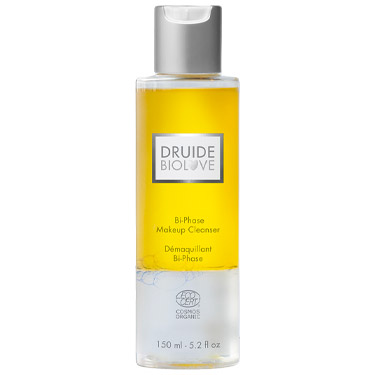
Discover the bi-phase makeup remover
.
For those who prefer a simplified routine and do not wear makeup, a simple cleanse with the BioLove Cleansing Milk is sufficient in the evening. In the morning, depending on skin type, the BioLove Soothing Toner can replace cleansing for normal to dry skin, to avoid disrupting the hydrolipidic film.