Hair damaged by flat iron: the telltale signs and what to do about them
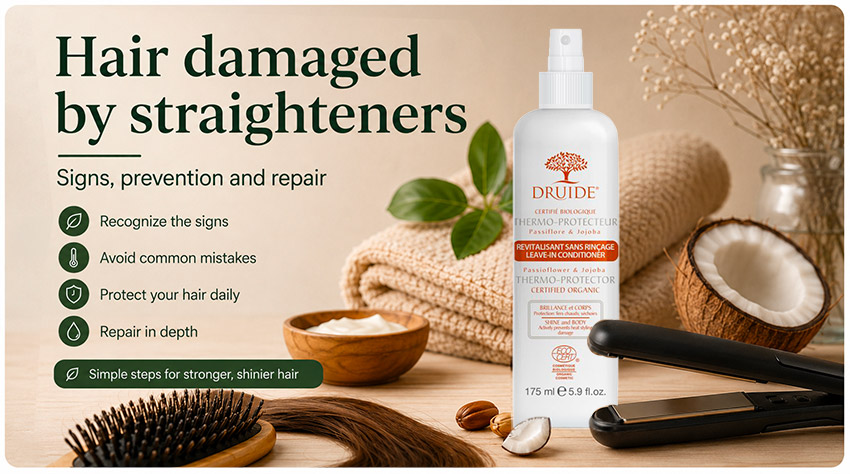
The flat iron is one of those everyday gestures we adopt without always measuring its impact. A stubborn strand in the morning, a blow-dry that won't hold, an event to get ready for: we heat the plates, glide them through, and the hair seems disciplined in just a few minutes. Yet, at 200 or 230°C (390 or 450°F), the hair fiber suffers a small aggression each time, the effects of which build up week after week. Recognising hair damaged by flat iron, understanding why it becomes fragile and knowing how to protect it day after day: here is a complete overview to lastingly preserve the health of your lengths.
Five signs that your flat iron is damaging your hair
Thermal damage is not always spectacular at first. It settles in silently, strand after strand, until the entire hair carries the marks. Learning to spot it early allows you to adjust your routine before the lengths require a drastic cut.
Dry, split or brittle ends
This is the most visible sign and often the first to appear. The ends become rough, split and snap at the slightest tension. When the phenomenon affects the whole length and not just the tips, it is generally the signal that a flat iron damages hair on a repeated basis. To go further on this topic, the article all you need to know about brittle and split hair details the underlying mechanisms and the right reflexes to adopt.
A rough texture to the touch
Healthy hair glides smoothly between your fingers. When hair feels catchy, grainy, tangles more quickly and requires multiple brush strokes to comb through, it means the cuticle scales have lifted under the effect of heat. The fiber is no longer smooth, it catches.
Dull hair that no longer reflects the light
The natural shine of hair depends on the quality of the lipid film on the surface and the regularity of the cuticle scales. When hair becomes dry from the straightener and dull, when it looks lifeless even after washing, it means the heat has altered this protective film. No styling can revive its glow without a suitable treatment.
A loss of elasticity when detangling
A healthy hair strand stretches slightly before returning to its original shape. A strand weakened by heat loses this elasticity: it snaps the moment you pull on it, with no prior stretch. The test is simple: take a strand between your fingers and gently pull on it. If it breaks without resistance, the fiber has been depleted of water and keratin.
A burnt smell during straightening
This is the most overlooked signal, and yet the most telling. That distinctive smell during the passage of the plates is the smell of keratin denaturing on contact with excessive heat. When it appears, thermal hair damage is already underway. It is time to lower the temperature, slow down the pace or rethink the protection applied beforehand.
Understanding the effects of heat on the hair fiber
Hair is mainly composed of keratin, a protein structured in scales that overlap like the tiles of a roof. This delicate organisation provides both the strength, the suppleness and the shine of the hair. When a flat iron at 200 or 230°C is applied, those scales lift, the water contained inside the fiber evaporates abruptly, and the protein bonds can become denatured.
Repeated too often, this thermal stress weakens the cuticle, weakens keratin and eventually paves the way to split ends from straightener use and breakage. To understand in detail the mechanisms at play and the ingredients capable of protecting the fiber, our article on heat protection and keeping your hair safe from heat offers an in-depth look at the subject.
Four common mistakes that make damage worse
Beyond the use of the flat iron itself, certain habits significantly accelerate the weakening of the lengths. Identifying them allows you to act straight away, without radically changing your routine.
Straightening wet or very damp hair
Water turns into steam the moment it comes into contact with a surface heated above 100°C. On still-wet hair, this phenomenon creates a micro-explosion within the fiber itself. The hair must be perfectly dry, or only very slightly damp if the heat protectant explicitly allows it, before the plates are passed through.
Going over the same strand several times
To save time, we tend to straighten large sections in one go or to go over the same strand several times to get a flawless result. Both gestures multiply the thermal aggression. It is better to take thin strands, glide in a continuous movement from root to tip, and avoid going back over an area already treated.
Setting the flat iron at too high a temperature
Not all hair needs 230°C. Fine hair straightens at 150-170°C, normal hair at 180°C, and only thick or very dense hair calls for higher temperatures. Many devices are sold with the thermostat pushed to maximum by default, while a gentler temperature is more than enough to achieve a beautiful result. To go further, the flat iron comparison according to hair type helps identify the most appropriate device for your hair nature.
Straightening every day, without a break
Even with impeccable heat protection, daily straightening eventually marks the fiber. Spacing out straightening sessions, varying styling, accepting one day in two with hair in its natural texture: this is probably the most effective preventive gesture, and the cheapest one too.
A daily routine to prevent damage
The best strategy against thermal damage to hair remains prevention. Three simple steps, integrated into the daily routine, are enough to lastingly transform the resistance of the lengths to heat.
Before straightening, prepare the fiber
Preparation begins from the wash itself: a gentle shampoo, free from harsh sulphates, that respects the hydrolipidic film of the scalp. Drying must be complete, in the open air whenever possible, or with a hair dryer on moderate power and 15-20 cm away from the hair. Then comes the key step: applying a thermo-protective treatment, sprayed evenly over all the lengths before the flat iron passes through. The Druide Thermo-Protector Spray, formulated with heat-resistant plant oils and antioxidants, creates a protective veil without weighing down the fiber.
During straightening, limit the aggression
Thin strands, continuous movement, temperature suited to your hair type: these three rules cut in half the thermal stress endured by the lengths. It is better to spend a little more time styling with a flat iron set at 180°C than to rush through the session at 230°C. A heat protectant applied from root to tip plays its role as a shield, provided it is well distributed.
After straightening, rehydrate and soothe
A few hours after styling, the fiber needs to find its hydric balance again. A light leave-in treatment, applied in the evening or the next day, helps restore the suppleness of the lengths and limits the appearance of frizz. This step, often overlooked, makes all the difference over time.
Repairing damaged hair: what is realistic
When damage is already there, one question always comes up: can you really repair burnt hair from straightener use? The answer deserves to be nuanced. Hair, once it has left the scalp, is not living tissue: it does not regenerate like skin. Three complementary levers can however be activated.
The first lever is appearance. Targeted care for damaged hair, rich in nourishing agents and film-forming actives, coats the fiber, smooths the cuticle and brings back shine. They do not rebuild the hair from within, but they significantly improve its feel, suppleness and hold. A shampoo suited to dry and brittle hair is the first step to begin this surface restoration.
The second lever is the protection of the lengths still healthy. As long as you keep using the flat iron without precaution, new aggressions add to the previous ones. Putting in place a heat protection routine straight away allows you to stop the damage and to give time to new hair to grow under good conditions.
The third lever, sometimes unavoidable, is the cut. When the ends are too damaged, split over several centimetres or breaking at the slightest detangling, no treatment can rebuild them. A clean cut, even just a few centimetres, starts again from a healthy base and lets the lengths regain vitality. It is not a failure, it is a fresh start.
Druide hair care to support this routine
To put in place a coherent routine when dealing with hair damaged by flat iron, Laboratoires Druide offers several organic hair care products that articulate around the three stages of heat protection: preparation, protection and restoration.
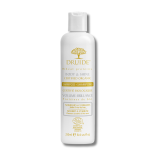
- The Body & Shine Shampoo, formulated for dry, dull and brittle hair, gently cleanses without aggressing the fiber weakened by heat.
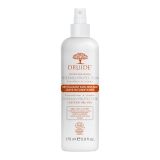
- The Druide heat protection spray, based on jojoba oil, coconut oil and plant extracts, forms a natural shield against the heat of styling tools up to 200°C.
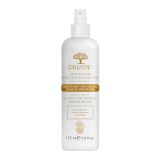
- The Instant Detangling Leave-in Conditioner, enriched with aloe vera, cotton flower and mango, hydrates and makes detangling easier on weakened lengths without weighing them down.
A few good daily habits
Beyond the choice of products, certain simple gestures make a real difference over time:
- Dry gently with a microfibre towel: vigorous rubbing with a thick towel lifts the cuticle scales and weakens the fiber. Patting gently, or wrapping the hair in an absorbent towel, is enough to remove excess water.
- Detangle on dry or slightly damp hair: wet hair is three times more fragile than dry hair. Detangling before washing, or waiting until the hair is barely damp, considerably limits breakage.
- Choose a suitable brush: brushes with natural bristles or soft pins respect the fiber better than aggressive brushes. Start detangling at the ends and work your way up gradually toward the roots.
- Space out washes when possible: washing too often tires the scalp and depletes the protective film. Two to three washes a week are enough in most cases.
- Protect your hair at night: a silk or satin pillowcase reduces friction and limits the appearance of frizz and breakage on waking.
- Mind your diet: a balanced diet, rich in proteins, fatty acids and B vitamins, supports hair quality from the inside.
Preserving hair health one straightening session at a time
Giving up the flat iron for good is neither necessary nor realistic for most people who have made it a daily ally. On the other hand, combining a reasonable temperature, systematic heat protection, careful gestures and suitable care lastingly transforms the resistance of hair to heat. After a few weeks, the fiber feels more supple, the ends less dry, the hair regains a natural movement. Hair damaged by flat iron use is not inevitable: it is the result of habits that can always be adjusted, one gesture at a time.
FAQ: hair damaged by flat iron
How can I tell if my flat iron is really damaging my hair?
Several signs are unmistakable: split or brittle ends, a rough texture, loss of shine, reduced elasticity when detangling, and above all a burnt smell during the passage of the plates. When at least two of these signs appear at the same time, it means the flat iron is going beyond what your hair can take. Adjusting the temperature, spacing out sessions and systematically applying a heat protectant allows the trend to be reversed.
Can you really repair hair burnt by a flat iron?
Hair not being living tissue, it does not regenerate. However, targeted care can coat the fiber, smooth the cuticle and bring back suppleness to the lengths. Protecting the hair still healthy is just as important: it allows the damage to stop while new hair grows under good conditions. When the ends are too damaged, a clean cut sometimes remains the best option to start again on a healthy base.
What temperature should I use a flat iron at without damaging my hair?
Temperature depends on hair type. Fine hair straightens around 150-170°C, normal hair between 170 and 180°C, thick or very dense hair may call for 190 to 200°C. Above 200°C, the risk of thermal damage increases significantly, regardless of hair type. It is better to take thin strands at a moderate temperature than to push the thermostat to save time.
How often per week can you use a flat iron?
To lastingly preserve the hair fiber, two to three straightening sessions a week is a reasonable frequency, provided a heat protectant is systematically used. Daily straightening, even with suitable protection, eventually marks the lengths. Alternating with natural hairstyles, braids or buns gives the fiber time to recover between two passages of the plates.
Should the heat protectant be applied on dry or damp hair?
This depends on the product and the device used. For a flat iron or curling iron, heat protectant is applied on dry or very slightly damp hair, never wet: the residual water would turn to steam under the heat of the plates and damage the fiber. For a hair dryer blow-dry, applying on damp hair is on the contrary perfectly suitable. Always refer to the instructions of the chosen product.
Why does my hair smell burnt during straightening?
This distinctive smell signals that the keratin in the hair is denaturing on contact with excessive heat or residual moisture. It should never be ignored. The first measures to take are to lower the temperature, to check the hair is perfectly dry before the plates are passed through, and to make sure a heat protectant has been applied and well distributed. If the smell persists, it often means it is time to space out straightening sessions to let the fiber recover.
How long does it take to get healthy hair back after using a flat iron?
It all depends on the extent of the damage and the consistency of the new routine. Within a few weeks, suitable care and systematic heat protection visibly improve feel, suppleness and shine. To get fully healthy lengths back, you often have to wait several months, the time for damaged hair to be progressively cut and replaced by fresh regrowth. Patience and consistency are the best allies of restored hair.